One connected intelligence layer for observing, understanding, deciding, and acting in real systems.
Forecasting, Control & Optimization
Learning how complex systems evolve—and turning that knowledge into better decisions.We develop probabilistic and deep time-series models that capture uncertainty, missing information, and changing operating conditions. Forecasts are then connected to optimization and learning-based control for energy and industrial applications.
Probabilistic forecasting
Deep sequence models
Reinforcement learning
Decision-making under uncertainty
Energy demand
Thermal-hydraulic systems
EV charging
Industrial operations
Anomaly Detection
Finding rare and consequential signals with less dependence on labeled failures.We study anomaly detection for tabular, image, vibration, and multivariate sensor data. Our recent work explores the intrinsic representations of untrained neural networks, robust distance-based scoring, and explanations that help people understand why a sample is considered abnormal.
Untrained neural networks
Representation learning
Explainable AI
Uncertainty & calibration
Nuclear safety
Predictive maintenance
Machine signals
Visual inspection
Vision–Language Action
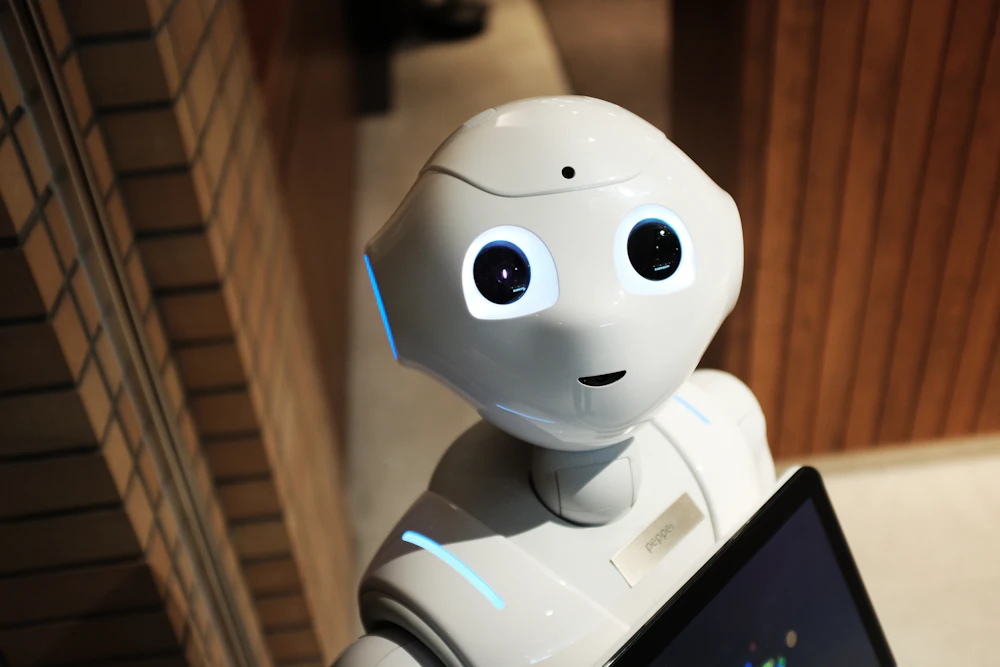
Connecting perception and language understanding to purposeful action in the physical world.We study multimodal models that ground visual observations and natural-language instructions in robotic actions. Our goal is adaptive embodied intelligence that can understand context, generalize across tasks, and interact safely with real environments.
Vision–language models
Robot learning
Multimodal representation
Embodied AI
Adaptive manipulation
Human–robot interaction
Industrial robotics
Autonomous systems
Augmented Intelligence
Designing AI that extends human awareness instead of hiding the system behind automation.We combine foundation models, digital twins, robotics, and immersive interfaces to make complex industrial information easier to access and act on. Our focus is the practical integration of machine intelligence with domain expertise and human judgment.
Machine-signal foundation models
Large language models
Digital twins
Human–AI interaction
Industrial copilots
AR/VR interfaces
Robot intelligence
Operator support